
One link, so nobody has to ask you either.
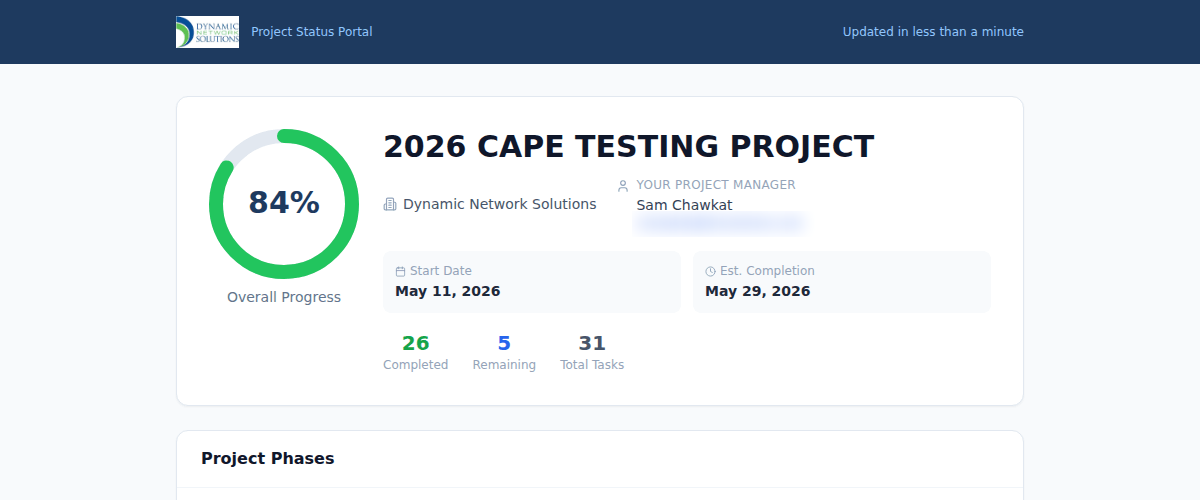
A live status portal for every project we run: overall progress, every phase with its real dates, what is left, and who is responsible.
The normal way to find out where an IT project has got to is to email your project manager and wait. What comes back is accurate as of whenever they last checked, filtered through what they think you want to hear, and out of date again by the time you have forwarded it to the person who asked.
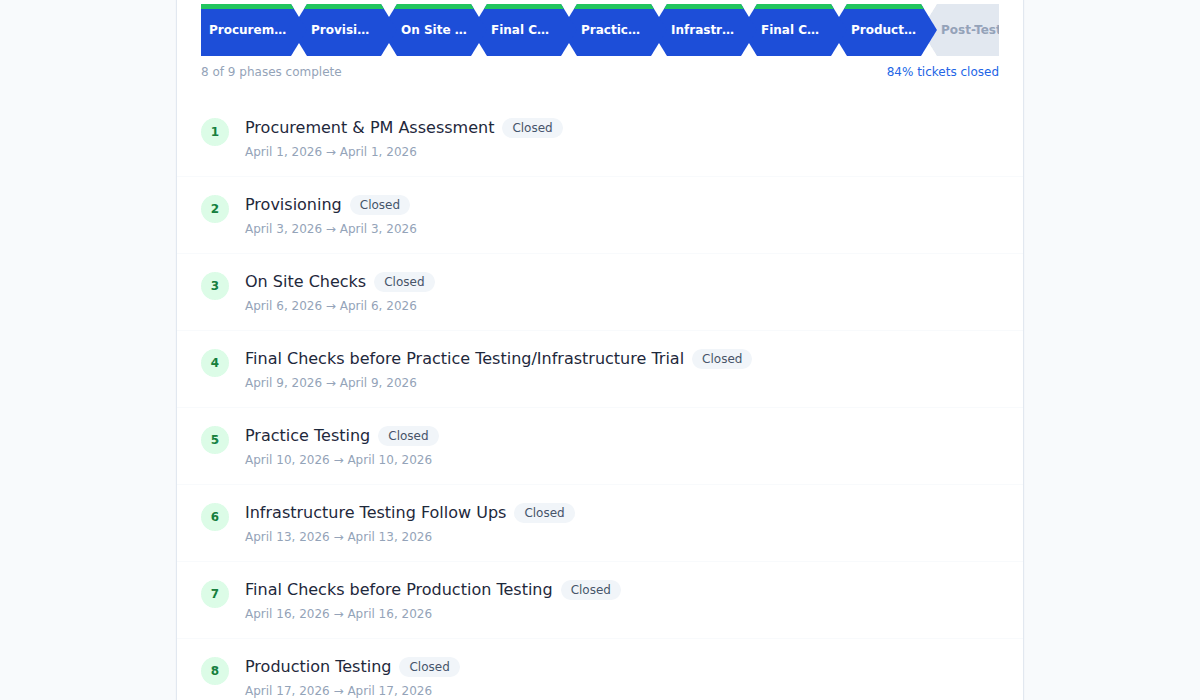
ProjectHub removes the asking. It shows the same project data our engineers work from: percentage complete, how many tasks are done against how many there are, the start date, the estimated completion, and every phase in order with the dates it opened and closed. It updates as they update it.
It is deliberately one link with no login ceremony, because the people who need the answer are often not the people who hired us. A superintendent, a business manager or a board member can see where a project stands without going through you first, which is usually the point at which you no longer have to write status reports.
The dates are visible on purpose
Every phase shows the date it opened and the date it closed. That is not a detail we could leave off, and we did not want to. A schedule you can check is the only kind that means anything.
It cuts both ways, which is the point. If a phase ran late you can see that it ran late, and you can see it in week two, while there is still time to do something about it. We would rather have that conversation early than defend a summary at the end.
One link, no login ceremony
The top of the page answers the only question most people came with. Below it, every phase with the date it opened and the date it closed.
What clients notice first
None of these are features. They are what people tell us after a project or two.
The status email stops
Nobody writes to ask where things are, because looking takes less time than asking. That is time back on both sides, and it is most of the value in the first month.
Slippage shows up early
A phase that has not closed on the date it said it would is visible the day it happens, to you as much as to us. Problems get discussed while there is still room to move them.
Everyone is looking at the same thing
No version of the truth per person, no forwarding a summary that was accurate on Tuesday. The people who need the answer get it from the same place we do.
Let's talk about what's not working.
A 20-minute call with a consultant. No sales script.