
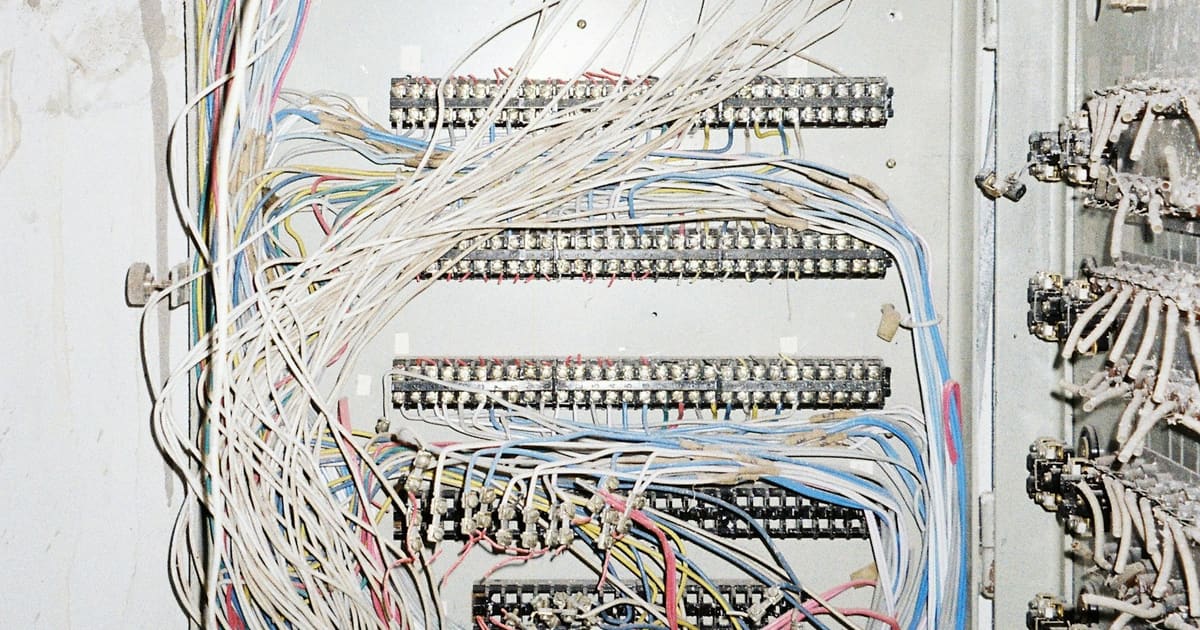
In March the FCC removed the approval process carriers used to need before retiring copper phone lines. What used to take months of filings can now happen with as little as 90 days notice. AT&T began decommissioning wire centers in June and is targeting full copper retirement by 2029, and every other carrier is working to a similar clock.
Most organizations read that as a phone bill story and move on. It is not. The phones moved to VoIP years ago in most buildings. What is still sitting on copper is the equipment nobody thinks about.
What is probably still on a line
Walk your building and you will usually find four things:
The elevator phone. Code requires a working emergency phone in the car with a live connection to someone who answers. It is almost always analog, it is almost always on a line billed separately, and nobody has looked at it since the elevator was installed.
The fire alarm communicator. Many panels still dial out over two copper lines to reach the monitoring centre. If those lines go dead the panel usually reports a trouble condition, and whether anyone notices depends on who reads the panel.
Alarm panels and access control dialers. Same principle, older equipment, often on a line that has been billed for a decade.
Fax, gate phones, and the card terminal in the back office. Less critical, still disruptive on the day they stop.
Why 90 days is the problem
None of these are hard to replace. Cellular communicators and analog terminal adapters have been mature for years, and the work is a morning per device in most buildings.
The difficulty is that the clock does not start when you are ready. It starts when a notice arrives, and it arrives addressed to whoever is on the billing account for a line nobody has thought about since installation. In a district that might be a facilities inbox. In a county agency it might be a purchasing address. The notice is easy to miss precisely because the line is easy to forget.
Then the elevator inspector arrives, or the fire marshal, and the conversation is about compliance, not telecom.
What to do about it now
The useful move is an inventory, not a project. Pull every phone bill you are paying and list the lines you cannot immediately account for. For each one, find out what it terminates on and whether it is life safety. That exercise usually takes an afternoon and it is most of the job: once you know what is on copper, replacing it is scheduling.
Before you start: life safety endpoints should move to managed cellular. A fire alarm dialer or an elevator phone has to work when the internet is down and the power is out, and VoIP does neither. And if the building has an elevator, the elevator company and the phone carrier are usually two different vendors, and neither thinks the connection is their responsibility.
If you want a hand with the inventory, that is a short conversation and we do not need to be your provider to have it. The worst version of this is finding out from an inspector.
Sources: FCC order on copper retirement, March 2026. AT&T wire centre decommissioning schedule, 2026.